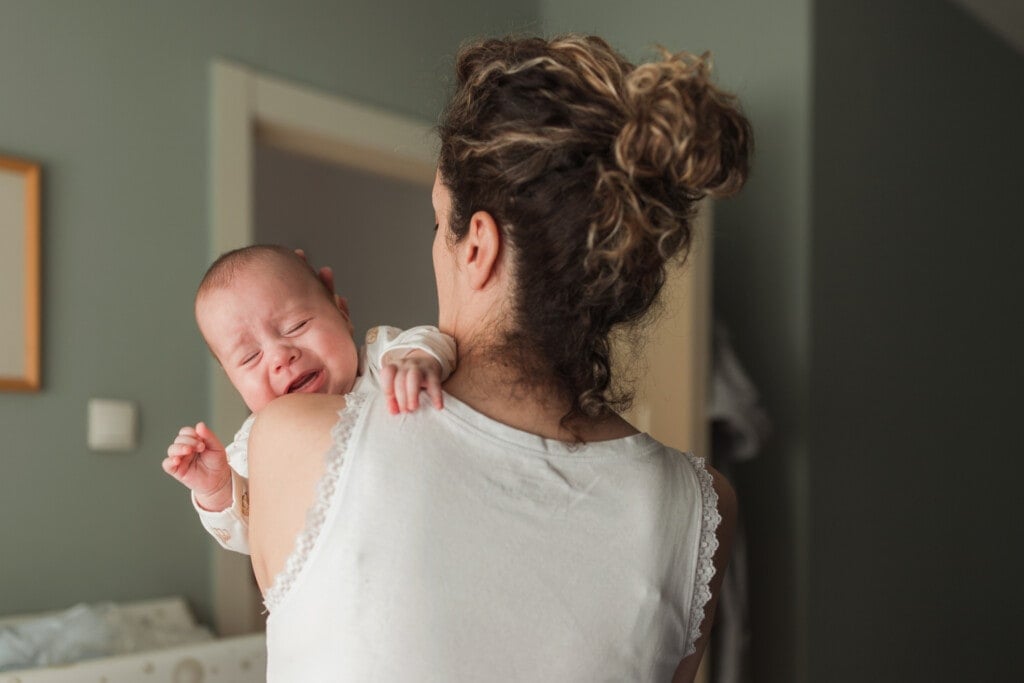
I’m sure I paced a good-sized rut on the floor when my little girl was a baby. She would wail rather loudly at night, and the only thing that seemed to work was walking back and forth for hours. At least, it certainly felt like hours during those early morning wake-ups. And the trickiest part was that just when I thought she was down for the count, and I would lay her down, sure enough, her wailing would start up again!
So why do babies cry when you sit or put them down? I’m not the only one who has had this experience with their babies. This is especially common during the newborn stage and early infancy.
For many exhausted parents, it can feel impossible to figure out why this happens. During those especially exhausting moments, you have to be on your feet, pacing, swaying, and rocking. So, let’s explore why babies cry when you sit and stop when you stand, and why that matters to them.
If you’ve ever spent hours pacing with a distressed baby, you’re not alone. Science actually explains why standing helps calm your little one.
Key Takeaways
- Babies often calm down when parents stand or walk because movement helps them feel safe and secure.
- Researchers believe this response is connected to natural survival instincts and attachment behaviors.
- Standing and swaying can help reduce a distressed baby’s heart rate and stress response.
- This behavior is normal and does not mean your baby is trying to be difficult.
- Being held close and gently moved simply helps babies feel calm and protected.
Why This Baby Behavior Is Completely Normal
First, it’s important to note that this type of behavior is perfectly normal in babies, and science can help us explain why it happens. Infants are highly vulnerable to various environmental threats, so they are reliant on their parents to keep them safe. To help, they have built-in and very primitive instincts that give their parents signals about what they need.
This instinctive behavior traces back to a time when humans lived in environments where staying close and ready to move quickly was important for survival. To a time when we had to run and hide and keep ourselves and our families safe from dangerous animals in our environment.1 In fact, this instinct isn’t just something we see in babies. You might even know it and recognize it already. It’s called the “Fight, Flight, Freeze” response.2
Related: Baby Fussiness: What’s Normal and What’s Not
Why Babies Calm When You Stand
Fight, flight, and freeze are biological responses our bodies exhibit when they recognize a threat in the environment. This is in anticipation that we might need to fight off or run away from the danger and:3
- Our body prepares to protect itself from danger by increasing our blood pressure, heart rate, blood sugar, and fats to give the body extra energy for whatever it needs to do
- Blood flow is diverted from other body parts to certain muscles that help protect us. For example, our arms and hands to fight, and legs and feet to run or kick
- Muscles are tensed, so our body is extra strong and speedy
So, how does all of this biology link back to why our babies cry and become upset when we sit down?
Related: 6 Different Baby Cries and What They Mean
Why Babies Feel Safer When You’re Standing
Physical closeness and movement can help babies feel connected, comforted, and secure.
It all comes back to our babies being vulnerable. When they are soiled, hungry, thirsty, or need connection, they may feel stressed or under threat, which is a normal response.
Their little bodies undergo the same stress response as adults: fight, flight, and freeze.
The difference is that they are too small and not developed enough, actually, to flee or fight off the threat themselves. Research has shown that when parents stand up with a distressed infant in their arms, the infant’s heart rate starts to decrease.1 This suggests their stress response is beginning to settle, which helps babies feel more secure.
Related: Ways to Soothe a Fussy Baby
The Survival Instinct Behind It
In essence, your baby feels safe because instinctively, they know that if you are moving around or walking, you are more likely to be able to flee from danger.
This makes them feel much safer and calmer than if they were in your arms while you were sitting. Sitting positions make it harder for us to move quickly to respond and escape a threat.
Some babies settle and become quieter, and their body movements become calmer, not only because they feel more secure, but also, from an evolutionary perspective, because it is easier for the parent to flee with an infant who is easy to carry.4 For example, if they aren’t squirming, which makes them difficult to hold, or crying loudly, which draws attention to them.
Even though it can feel exhausting when your baby only settles while you’re standing or pacing, there are real scientific and instinctive reasons behind this behavior. Babies aren’t trying to frustrate parents. Movement, closeness, and physical comfort simply help them feel calm and protected.
If you’ve spent hours walking the floor with a crying baby, you’re definitely not alone. For many parents, this phase is a very normal part of early infancy, even if it feels endless in the moment.